Research / Integral model / WP10
WP10 · Integral model
Integral models
In the project plan: Integral model
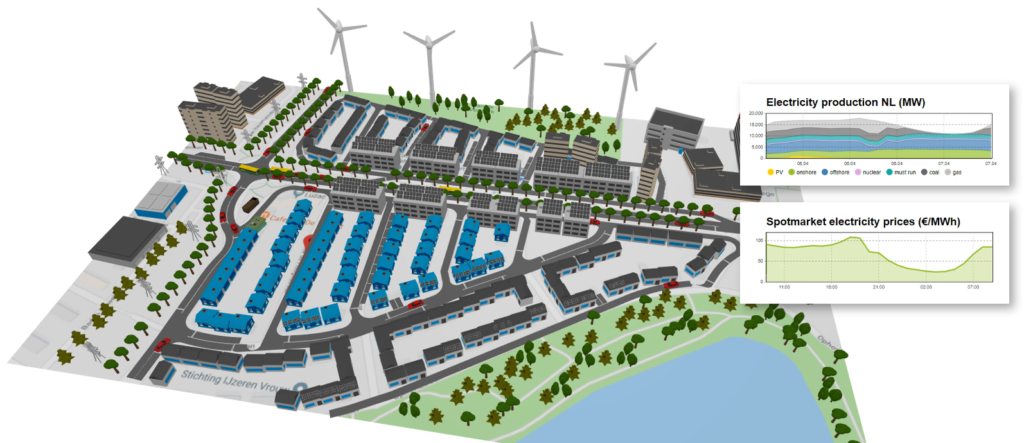
The integral model brings the knowledge of all other work packages together. It is an open-source, agent-based simulation of energy and mobility in which digital twins of neighbourhoods, regions and the Netherlands contain realistic people, vehicles, buildings and grids, so that stakeholders can explore which interventions lead to fast, affordable and fair pathways and see costs, emissions and business cases directly.
✎ draftPrincipal investigators
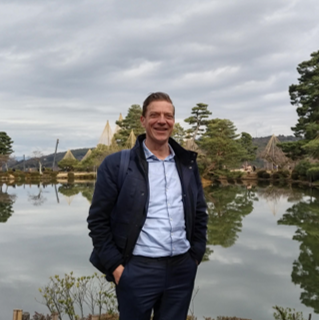
 Auke Hoekstra
Principal investigator · Zenmo / Eindhoven University of Technology
 Derk Loorbach
Principal investigator · Erasmus University Rotterdam (DRIFT)
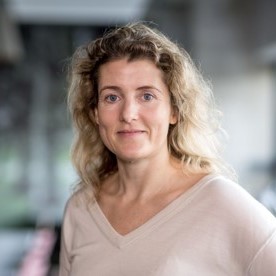 Floor Alkemade
Principal investigator · Eindhoven University of Technology
Floor AlkemadePrincipal investigator · Eindhoven University of Technology Geert Verbong
Principal investigator · Eindhoven University of Technology Jan Rotmans
Principal investigator · Erasmus University Rotterdam
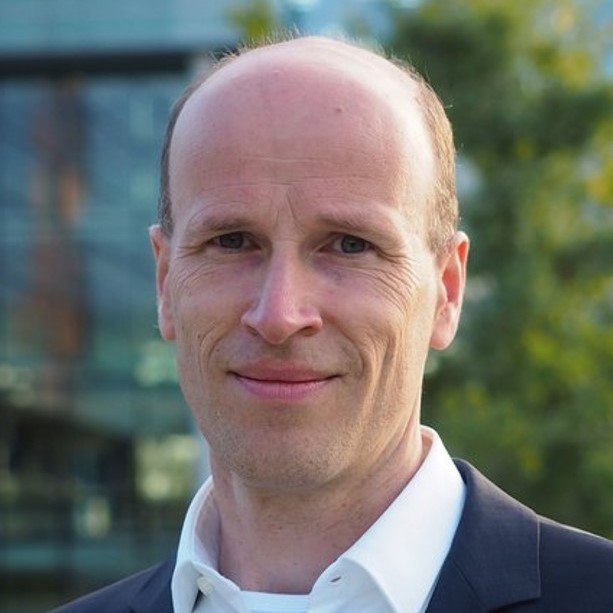 Korneel Wijnands
Principal investigator · Eindhoven University of Technology
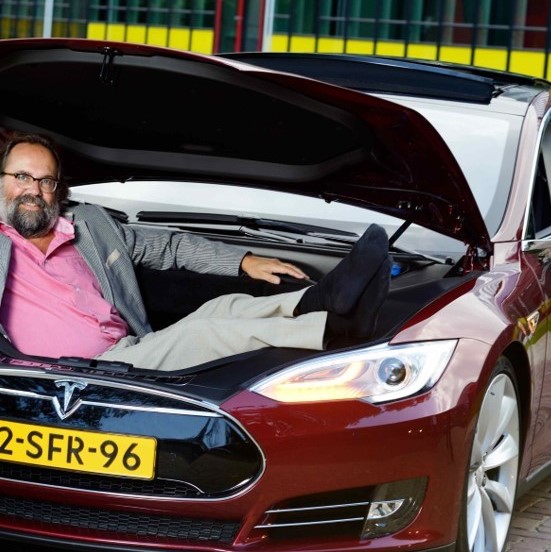 Maarten Steinbuch
Principal investigator · Eindhoven University of Technology
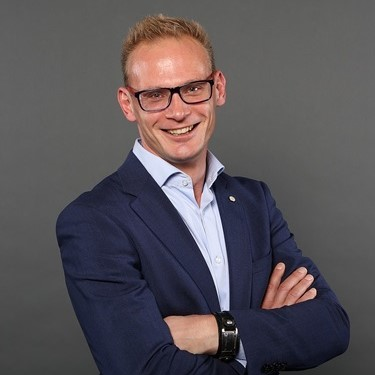 Paul van de Coevering
Principal investigator · Breda University of Applied Sciences
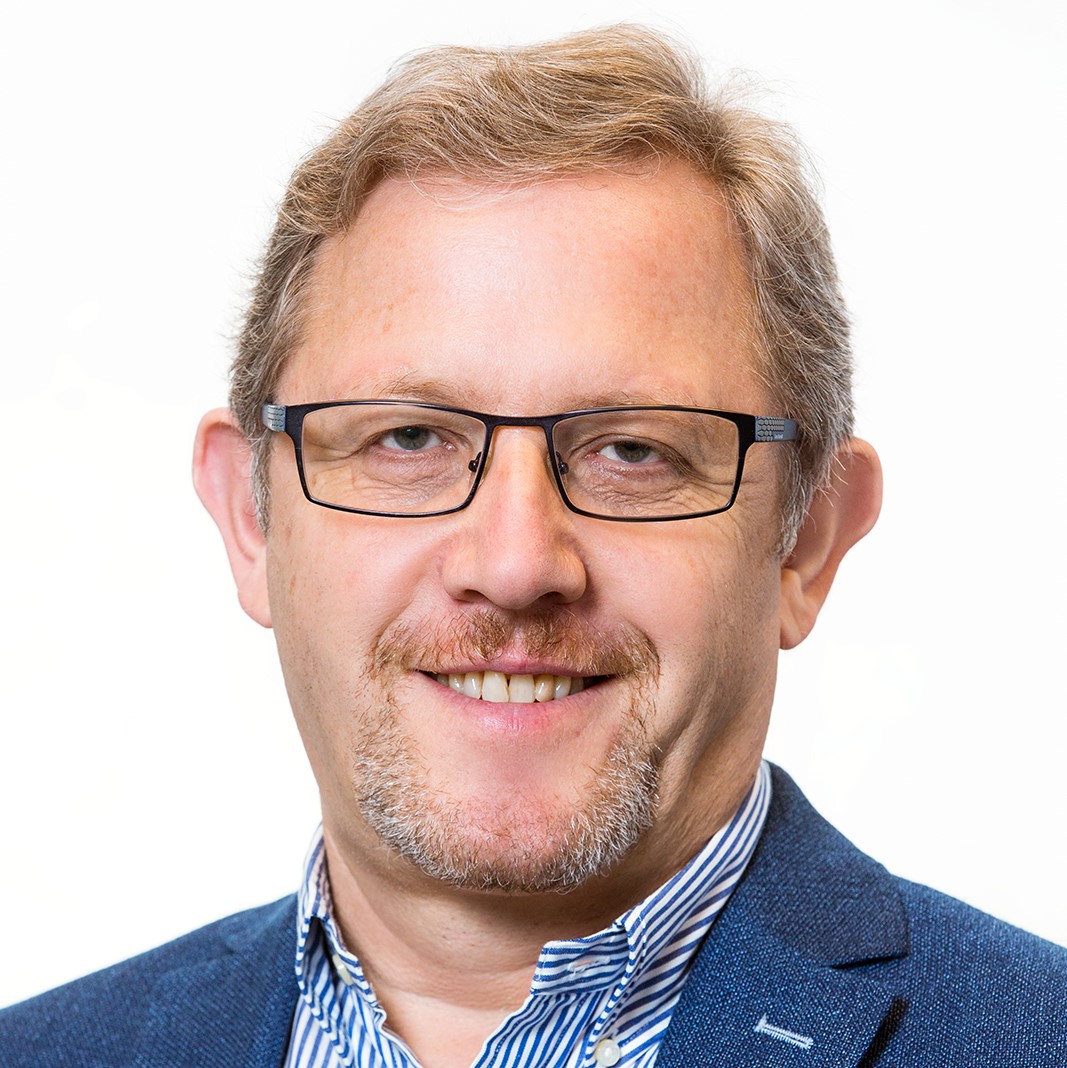 Pavol Bauer
Principal investigator · Delft University of Technology
 Reint Jan Renes
Principal investigator · Amsterdam University of Applied Sciences (HvA)
 Roland Schmehl
Principal investigator · Delft University of Technology
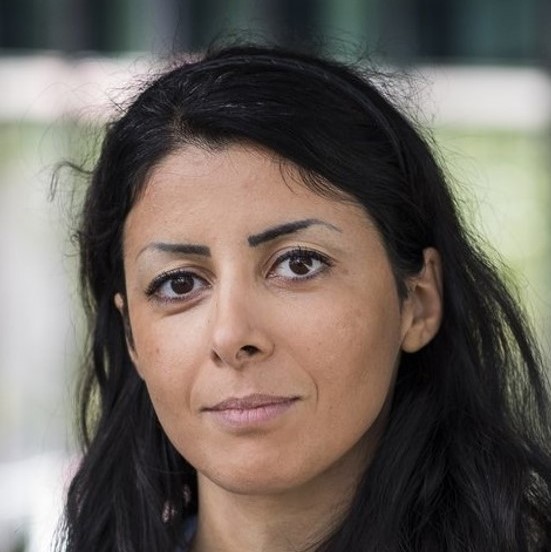 Soora Rasouli
Principal investigator · Eindhoven University of Technology
PhD researchers
 Emiel van Druten
Phd candidate | sector coupling for accelerating the energy transition · Eindhoven University of Technology
 Naud Loomans
Phd candidate | agent-based socio-technical energy transition models · Eindhoven University of Technology Peter Hogeveen
PhD researcher · Eindhoven University of Technology / Zenmo
 Prapti Maharjan
Php candidate | life cycle assessment (lca) · Eindhoven University of Technology
 Sharif Khaleghparast
Phd candidate | agent-based simulation modelling · Eindhoven University of Technology
 Swapnil Shekhar
Phd candidate | simulation modelling · Eindhoven University of Technology
 Tessa Leferink
Phd candidate | urban planning & sustainable transport choices · Eindhoven University of Technology
 Willem Klok
Phd candidate | finance & sustainability transitions · Eindhoven University of Technology
 Younjung Choi
Phd candidate | architecture & mechanism of an energy mobility systems model · University of Twente
Other researchers
Co-investigator · Eindhoven University of Technology Kees Maat
Co-investigator · Delft University of Technology
 Maarten Bonnema
Principal investigator · University of Twente Mara Hauck
Co-investigator · Eindhoven University of Technology
 Mixel Kiemen
Postdoc. researcher | point of contact | servant leader | ecosystem architect | collective intelligence · Eindhoven University of Technology
- Geert Verbong, Professor
Partners









Also involved: Zenmo, Brainport Eindhoven
About this work package
Objectives
- Develop a methodology turns the inputs of an interdisciplinary set of stakeholders in energy and
mobility into integral, quantified and potentially disruptive scenarios. - Develop a methodology that allows an interdisciplinary set of stakeholders in energy and mobility
to jointly explore the most interesting/disruptive interventions. - Create a tool that brings the work packages together in interdisciplinary cooperation.
- Find scenarios that can successfully Dutch address energy, mobility and climate challenges.
- Give insight in the business case and potential market share of individual technologies.
Activities
- Creating a modelling fundament:
a. Software environment: training; wiki; online server; collaborative environment; etc.
b. Shared modelling values: definitions; taxonomies; naming conventions; coding guidelines;
main agents and behaviors; interfaces; ways to modularize and co-simulate; etc.
c. Low level data like maps; demographic data; initial mobility patterns; road congestion
parameters, initial energy supply and demand, grid loads, etc. - Creating ‘digital twins’:
a. Choosing and modelling representative neighborhoods in cooperation with stakeholders.
Here individuals and machines travel and use energy and individual behavior is explored.
b. Choosing and modelling representative regions. This aggregates neighborhoods.
c. Modelling the global landscape: technological change; policy; energy interfaces (e.g. grid
interconnections and hydrogen pipelines); mobility interfaces (e.g. import/export).
d. Modelling the Netherlands as an aggregation of regions in the global landscape.
e. Creating energy and mobility systems in neighborhoods, regions and the Netherlands. - Modelling and exploring transformative energy scenarios. For example: cost-effectiveness of
different renewable subsidies; impact of breakthroughs in airborne wind, BIPV, (flow) batteries or
hydrogen; using smart or even bidirectional charging to stabilize a grid with lots of wind and solar. - Modelling and exploring transformative mobility scenarios. For example: how MaaS can lead to
both more and less congestion and CO2 emissions; smart hubs; integrating personal transport and
freight; impact of the availability of fast (MV) chargers on truck adoption and grid load.
Expected output
- At least 24 journal papers describing transformative energy and mobility scenarios, most coauthored
with other work packages (M12x3,4×7,36×8,48×6). - At least 8 journal papers on methodology, describing the modelling approach and effect of creating
scenarios in interdisciplinary teams (M12x2,24×4,36×1,48×1). - At least 25 conference papers. Most co-authored with other WPs (M12x5,24×15,36×10).
- Digital twins of at least: 5 representative neighborhoods (living labs); 3 representative regions;
the Netherlands as a whole; and the global landscape impacting the Netherlands. - Environment in which all members of NEON and external participants can contribute code.
- Online model versions that anybody can experiment with containing the annual outlook scenarios.
- At least ten workshops in which scenarios are explored with NEON stakeholders interactively.
- At least ten in depth scenarios every year (depth and sophistication gradually increasing) published
in the annual outlook report and coauthored with the relevant WPs (M12,24,36,48). - At least 5 PhDs will have spend more than 3 months abroad with knowledge institutions.
- At least 8 PhDs from abroad hosted by NEON.
- At least 100 mentions of NEON scenarios in national newspapers or on television.
Text from the former NEON website (original page).
What the plan set out to do
Promises from the 2019 project plan, not results.
A method that turns the input of interdisciplinary stakeholders into integral, quantified and potentially disruptive scenarios, and lets them jointly explore interventions.
A modelling foundation: shared software environment, coding guidelines, taxonomies and base data (maps, demographics, mobility, energy, grid loads).
Digital twins of at least 5 representative neighbourhoods (living labs), 3 representative regions, the Netherlands as a whole and the global landscape.
An environment in which all NEON members and external participants can contribute code.
Online model versions with the annual outlook scenarios that anybody can experiment with.
At least 10 workshops in which scenarios are explored interactively with stakeholders.
At least 10 in-depth scenarios every year in the annual outlook, co-authored with the relevant work packages.
At least 24 journal papers on transformative scenarios, 8 journal papers on methodology and 25 conference papers.
At least 5 PhD candidates more than 3 months abroad and at least 8 PhD candidates from abroad hosted by NEON.
At least 100 mentions of NEON scenarios in national newspapers or on television.
Publications and talks
- A climate-aligned financial system: leverage points for transformation (journal-article, 2026)
- Transforming finance: Institutional logics as causal belief systems in sustainable investment (journal-article, 2026)
- Agent-Based Coordination for Capacity and Energy Sharing Societies Through Battery-as-a-Service (conference-paper, 2026)
- Cable pooling to add renewables amid grid congestion: Exploring optimal integration of solar and batteries with existing onshore wind under cost uncertainty (journal-article, 2025)
- Energy Community Surplus Sharing: Solidarity Strategies for Energy Commons Governance (journal-article, 2025)
- Meta-analysis of life cycle assessments for Li-ion batteries production emissions (journal-article, 2025)
- Quantifying the potential of energy communities in renewable electricity generation in The Netherlands (journal-article, 2025)
- Using learning curves to guide the energy transition with the example of heavy electric trucks (journal-article, 2025)
- Research and Innovation Policy for the Energy Transition in the EU (book-chapter, 2025)
- The Limits of Sustainable Finance: A Systems Framework for Evaluating Transformative Change (report, 2025)
- Exploring the future of mobility: On the value of agent-based modeling of the transitioning mobility system (phd-thesis, 2024)
- Deriving experience curves: A structured and critical approach applied to PV sector (journal-article, 2024)
- Empowering energy communities: The curious case of a socially beneficial community-owned solar park (journal-article, 2024)
- Exploring trade-offs: A decision-support tool for local energy system planning (journal-article, 2024)
- Serious gaming to co-create a value-based mobility mix in a multi-objective arena (journal-article, 2024)
- Social tipping dynamics in the energy system (journal-article, 2024)
- Impacts, procedural processes, and local context: Rethinking the social acceptance of wind energy projects in the Netherlands (journal-article, 2023)
- Perspectives on Modeling Energy and Mobility Transitions for Stakeholders: A Dutch Case (journal-article, 2023)
- Applying design research for cross-disciplinary collaboration: Experiences from a gamification process (conference-paper, 2023)
- How Shared Autonomous Electric Vehicles Could Slash Resource Use and Make Cities More Enjoyable (conference-paper, 2023)
- Identifying potential use of emerging neighbourhood mobility hubs using behavioural modelling (conference-paper, 2023)
- Quantifying the Charging Flexibility of Electric Vehicles; An Improved Agent-Based Approach with Realistic Travel Patterns (conference-paper, 2023)
- Good practice policies to bridge the emissions gap in key countries (journal-article, 2022)
- Polder pumping-station for the future: designing and retrofitting infrastructure systems under structural uncertainty (journal-article, 2022)
- Revisiting static charge schedules for electric vehicles as temporary solution to low-voltage grid congestion with recent charging and grid data (journal-article, 2022)
- An Approach for Exploring Non-technical Complexity in Engineering Design Processes (conference-paper, 2022)
- Functions of Models Illustrating the Transitions of Energy and Mobility Systems (conference-paper, 2022)
- New home, new habits! Why moving and developing homes are opportunities for sustainable travel behaviour (conference-paper, 2022)
- Energy system transitions and low-carbon pathways in Australia, Brazil, Canada, China, EU-28, India, Indonesia, Japan, Republic of Korea, Russia and the United States (journal-article, 2021)
- Insights into factors affecting the combined bicycle-transit mode (journal-article, 2021)
- Optimal Agent Framework: A Novel, Cost-Effective Model Articulation to Fill the Integration Gap between Agent-Based Modeling and Decision-Making (journal-article, 2021)
- Quantifying the Fleet Composition at Full Adoption of Shared Autonomous Electric Vehicles: An Agent-based Approach (journal-article, 2021)
- The energy consumption of passenger vehicles in a transformed mobility system with autonomous, shared and fit-for-purpose electric vehicles in the Netherlands (journal-article, 2021)
- NEON-Integrated-Model (software, 2021)
- PhD defence: Exploring the future of mobility: On the value of agent-based modeling of the transitioning mobility system (phd-defence, 2024-01-30)
- How a recent attack on 100% renewable models might end the trench warfare and benefit our climate (news, 2023-07-31)
- Copper scarcity will not materially slow down the energy transition (news, 2023-05-06)
- The first NEON Q-celebration! (news, 2023-02-09)
- Sprinting towards NEON demo 2 and beyond (news, 2022-02-07)
- Why we must move beyond doomsday scenarios in order to save the planet (news, 2021-11-02)
- How to cross the transition gaps: ways to smooth the path (news, 2021-08-17)