People / Willem Klok
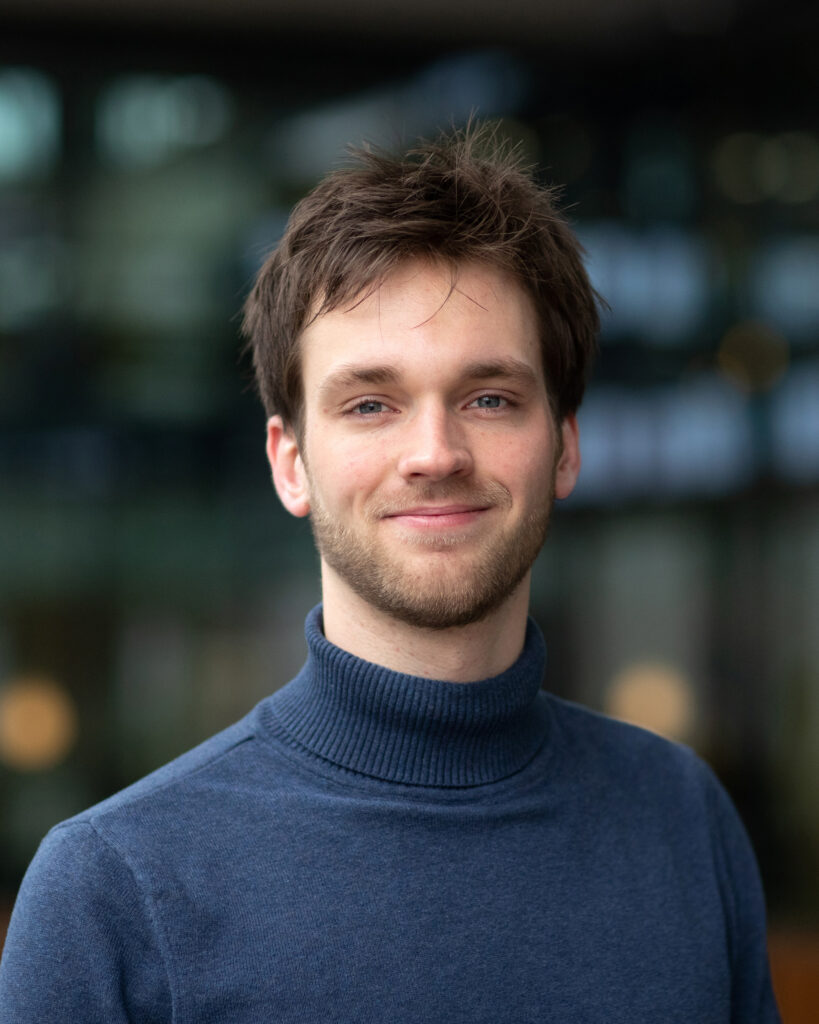
PhD researcher
Willem Klok
Phd candidate | Finance & sustainability transitions
- Institution
- Eindhoven University of Technology
- Work packages
- In NEON
- 2022 onwards
WP10 PhD candidate (also linked to WP3) on finance and sustainability transitions; co-facilitated a NEON Q-celebration workshop (2023).
Cornelis Willem (Willem) Klok, trained in mechanical engineering and the social sciences, studies the financial system from a sustainability-transitions perspective. His NEON work moved from community acceptance of wind energy to how finance can be aligned with climate goals, using system-dynamics and institutional-logics approaches.
About me
Ever since I was young, I’ve been intrigued by better understanding how the world works. While I started my studies at mechanical engineering, I’ve gradually expanded my knowledge to the social sciences, and now financial, domains. You could say that from understanding the world in an ordered way (i.e. physics), I’ve been increasingly drawn toward the chaotic world of people, culture, and behavior. How do these complex systems work? Why do they work? And how far can we stretch our imagination to find something better? These are the questions, or rather the mysteries, that guide my interests and as such a large part of my life.
Personal Motivation
My personal motivation for investigating the financial regime ties strongly to my personal motivation. For as long as we know it, the world of finance (i.e. planet finance), has drifted further and further from reality. I think this divergence started with the limited liability legislation that emerged during the 19th century. These laws ensured that investors could not be held liable for their investments’ financial losses beyond the amount of capital they invested. In other words, investors can’t lose more then they put in. From a financial perspective this made sense, but it was the first step toward the path we’ve now been walking down for decades, toward a space where the investor has been financially, but more importantly morally, exempted from the responsibility of the effects of their actions on the world in which we live. As such, they’ve literally created a world to which the moral values we hold so dearly no longer apply. The immoral person is not the person providing te coal company with the incentive (read: money), to burn it, but only the person engaged in the act. Right now, there is a big gap between the places where our money should go (climate mitigation and adaptation) and where it shouldn’t go (fossil industries). Yet, things are changing to narrow this gap. Incorporation of transition risk for fossil assets, subsidies for renewable energy, non-financial disclosure regulation… it seems that the regulator is starting to take action. But what are we actually doing? We’re changing the real world so that it’s more compatible with the type of finance the financial world is willing to provide. By making fossil fuels more expensive, and renewables cheaper, we are making the energy transition also the economically desirable transition, such that the financial world can provide the capital we need. Of course, it is one way to make the world more sustainable. The problem is that for it to work out in the long-term, we need to (1) put a price everything and (2) enforce it on a (3) global scale. While I truly admire this ambition, we should be realistic and admit that it will never be practically possible to achieve all these three things, let alone in the narrow window we have to take action. I think that instead of trying to turn the real world into numbers of profit, risk and loss, we should bring back the world of finance to the place we all live in. Only a world of extended responsibility, not limited liability, is a world that has a future.
Transition of the finance regime
In my research, I look at the financial regime from a transitions-perspective. What type of transition is needed to create a financial system that facilitates sustainability transitions in food, water and energy? How can we support the desirable transition? What track are we currently on?
These are just some of the questions to which my research will provide an answer. While largely abstract and conceptual, the research will be complemented with an Agent-Based Model to show the stability of a financial system built on more than financial incentives alone
Profile text from the former NEON website.
✎ draftPublications and talks
- A climate-aligned financial system: leverage points for transformation (journal-article, 2026)
- Transforming finance: Institutional logics as causal belief systems in sustainable investment (journal-article, 2026)
- Research and Innovation Policy for the Energy Transition in the EU (book-chapter, 2025)
- The Limits of Sustainable Finance: A Systems Framework for Evaluating Transformative Change (report, 2025)
- Impacts, procedural processes, and local context: Rethinking the social acceptance of wind energy projects in the Netherlands (journal-article, 2023)
- Applying design research for cross-disciplinary collaboration: Experiences from a gamification process (conference-paper, 2023)