Research / Transport and mobility / WP4
WP4 · Transport and mobility
Electric cars and trucks
In the project plan: Electric mobility
This work package developed methods to design and optimise electric powertrains quickly, for vehicles ranging from light electric vehicles and solar cars to electric buses and trucks, which suits a country that builds many small series of special-purpose vehicles. It also studied the business case of smart-charging solar cars and how people use electric vehicles, so the integral model could rely on realistic vehicle assumptions.
✎ draftPrincipal investigators
 Auke Hoekstra
Principal investigator · Zenmo / Eindhoven University of Technology
 Korneel Wijnands
Principal investigator · Eindhoven University of Technology
 Maarten Steinbuch
Principal investigator · Eindhoven University of Technology
 Pavol Bauer
Principal investigator · Delft University of Technology
 Theo Hofman
Principal investigator · Eindhoven University of Technology
PhD researchers
 Fabio Paparella
Phd | e-powertrain design for zero emission energy and mobility · Eindhoven University of Technology
 Jorn van Kampen
Phd candidate | architecture design for multiple electric vehicle products · Eindhoven University of Technology
 Maurizio Clemente
Phd | customer-tailored product family design for multiple electric vehicle fleet applications · Eindhoven University of Technology
 Olaf Borsboom
Phd | multi-fidelity modelling methods for electric vehicle powertrain systems · Eindhoven University of Technology Peter Hogeveen
PhD researcher · Eindhoven University of Technology / Zenmo
Other researchers

Partners





About this work package
Objectives
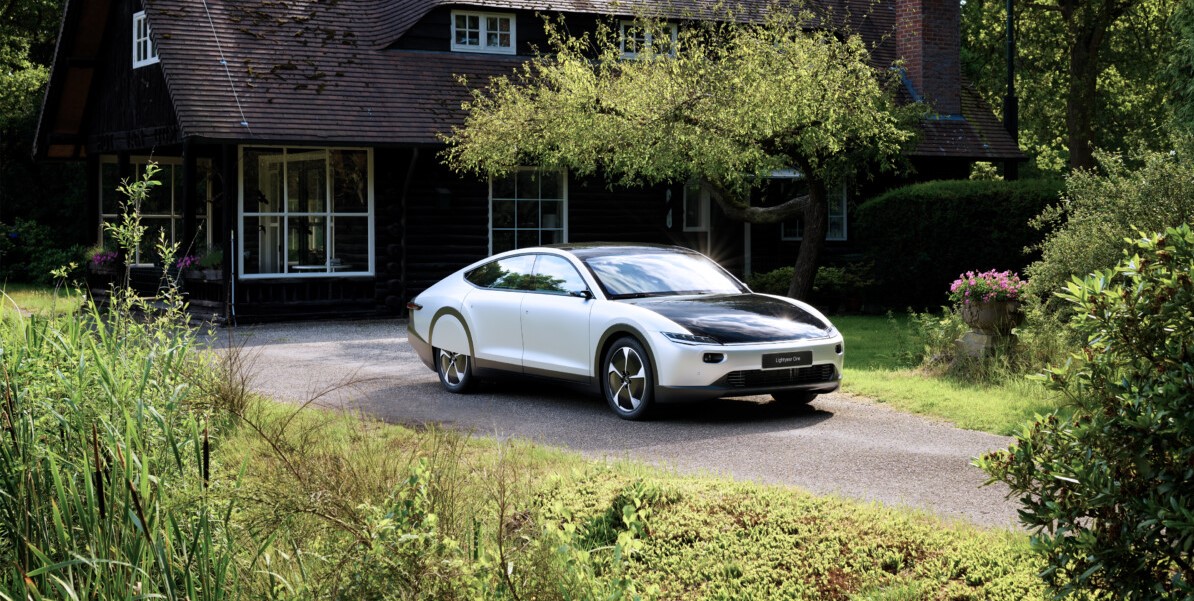
- Develop a methodology for improved parametric design and optimization of electrical (e-)
powertrains for a range of applications from lightweight (LEVs, solar cars) to heavy transportation
systems (e-trucks, e-buses). - Develop a methodology to optimally determine the synergy and business case of a smart-charging
(solar) car, truck, or buses (depending on the chosen case study) in the energy transition.
Activities
- Creating a modular electric powertrain simulation platform:
a. Functional and component system analysis; integrated in a network of smart and sustainable
energy producers (solar and wind) and (mobile and stationary) consumers of which the states
change dynamically.
b. Data collection (state-of-the-art components), (scalable) component and e-powertrain system
model development (TU/e, Lightyear, TNO).
c. Definition on the required design analysis responses, identifying coupled design variables
between the sub-design problems – e-powertrain(s) with advanced energy management design
interfacing new ultra-fast charging technology (linked to WP5 for heavy transport).
d. Development of an advanced energy management based on parameter/state estimation, taking
into account operation conditions (such as those presented by automation), as well as changing
parameters during the ageing of the systems. - Creating new model-based system engineering tools (MBSE):
a. Enabling design space exploration (e.g. automatic generation of new system architectures),
flexible to change designer’s preferences (e.g. problem setup), objectives (e.g. energy, cost of
ownership, transport efficiency) and components (technology, architectures).
b. Allowing the reusability of models (control system, storage, transmission, conversion
components) for different use cases as a shell around the modular simulation platform (from
task 1).
c. Allowing automated powertrain system design for (customer-)specific use cases in a fast and
cost-effective manner (even for small series production): using commonality-in-design and
other novel product design concepts based on studying the step moving from the classical
design to a new process validation method in product design. - Determining the optimal synergy and business case of a smart charging (solar) car in the energy
transition:
a. Iteration on the shared variables (via the constraints, objectives) between the design problems
at micro-grid (powertrain) and macro-grid level (energy producers/consumers).
b. Cost benefit analyses enabling to estimate and predict break through opportunities (linked to
WP10 in which aggregated results from this WP will be used) and estimate minimum component
and system specifications. - Determining and analysing people’s preferences regarding electric vehicles (e.g. solar cars):
Studying daily commuting behavior of people, the charging opportunities and in case of solar cars the
stochastically prediction of seasonal (solar) weather conditions (geographically), acceptance and trust
(social acceptance, linked to Task 1, WP5) in care free usage will be invested here.
Expected output
- Modular electric powertrain simulation platform capturing the component characteristics, operation
conditions of the powertrain systems with sufficient accuracy (M24). - New MBSE tools to quickly design optimized e-powertrain for small series production using novel
product design methods (M48). - At least 16 journal publications (M12x4, 24×4, 36×4, 48×4) and 32 conference publications (M12x8,
24×8, 36×8, 48×8) on describing new integrated system design methods and tools, new product
design using process validation concepts, technical analysis of potential integration benefits, the
business case and acceptance of LEVs, solar cars, e-buses and e-trucks are foreseen.
Text from the former NEON website (original page).
What the plan set out to do
Promises from the 2019 project plan, not results.
A modular electric powertrain simulation platform (month 24).
New model-based systems engineering (MBSE) tools to design optimised e-powertrains quickly for small series production (month 48).
A method to determine the synergy and business case of smart-charging solar cars, trucks or buses in the energy transition.
Research on people's preferences, commuting behaviour and charging opportunities for electric and solar cars.
At least 16 journal publications and 32 conference publications.
Publications and talks
- ECCV control benchmark for sustainable transportation: Six example solutions (journal-article, 2026)
- Sink Proximity: A Novel Approach for Online Vehicle Dispatch in Ride-Hailing (journal-article, 2026)
- A Decomposition-Based Framework for Joint Optimization and Spatial Packaging of Interconnected Systems with Physical Interactions (report, 2026)
- Competitor-aware Race Management for Electric Endurance Racing (report, 2026)
- Geometric Scaling of Battery Cells and Its Effect on Key Performance Indicators (report, 2026)
- Footprint-aware Electric Vehicle Family Design (phd-thesis, 2025)
- Optimization Models and Algorithms for Design and Operation of Electrified Vehicles (phd-thesis, 2025)
- Automated Three-Dimensional Spatial Optimization for Multidomain Systems With Alignment Constraints (journal-article, 2025)
- Concurrent design optimization of powertrain component modules in a family of electric vehicles (journal-article, 2025)
- Design Optimization of Electric Vehicle Drivetrains Using Surrogate Modeling Frameworks (journal-article, 2025)
- Human-in-the-loop energy and thermal management for electric racing cars through optimization-based control (journal-article, 2025)
- Meta-analysis of life cycle assessments for Li-ion batteries production emissions (journal-article, 2025)
- Mobilizing transport justice: a sufficientarian optimization framework for intermodal mobility systems (journal-article, 2025)
- Using learning curves to guide the energy transition with the example of heavy electric trucks (journal-article, 2025)
- Analysis of Nash and Stackelberg Equilibria of Autonomous Mobility-on-Demand Systems in Mixed Traffic (conference-paper, 2025)
- Two-wheel-driven Electric Superbike Powertrain Optimization (conference-paper, 2025)
- Intermodal Network of Autonomous Mobility-on-Demand and Micromobility Systems (report, 2025)
- Two-dimensional Spatial Optimization for Electric Motorcycle Powertrain Elements using Mixed-integer Programming (report, 2025)
- Electric Autonomous Mobility-on-Demand: Models and Algorithms for Ride-pooling and Fleet Design (phd-thesis, 2024)
- Exploring the future of mobility: On the value of agent-based modeling of the transitioning mobility system (phd-thesis, 2024)
- A Time-invariant Network Flow Model for Ride-pooling in Mobility-on-Demand Systems (journal-article, 2024)
- Electric Autonomous Mobility-on-Demand: Jointly Optimal Vehicle Design and Fleet Operation (journal-article, 2024)
- Joint Fuel-Optimal Control of the Velocity and Power-Split of Hybrid Electric Vehicles (journal-article, 2024)
- Model Predictive Control Strategies for Electric Endurance Race Cars Accounting for Competitors’ Interactions (journal-article, 2024)
- Optimal Endurance Race Strategies for a Fully Electric Race Car Under Thermal Constraints (journal-article, 2024)
- Ride-pooling Electric Autonomous Mobility-on-Demand: Joint optimization of operations and fleet and infrastructure design (journal-article, 2024)
- A Framework to Estimate Life Cycle Emissions for Vehicle-Integrated Photovoltaic Systems (conference-paper, 2024)
- A Geometric Electric Motor Model for Optimal Vehicle Family Design (conference-paper, 2024)
- A Time-Invariant Network Flow Model for Two-Person Ride-Pooling Mobility-on-Demand (conference-paper, 2024)
- A Two-dimensional Spatial Optimization Framework for Vehicle Powertrain Systems (conference-paper, 2024)
- Automated Design Optimization of Axial and Radial Flux Motors for E-powertrains (conference-paper, 2024)
- Congestion-Aware Ride-Pooling in Mixed Traffic for Autonomous Mobility-on-Demand Systems (conference-paper, 2024)
- Effective Scaling of High-Fidelity Electric Motor Models for Electric Powertrain Design Optimization (conference-paper, 2024)
- Exploring Electric Vehicle Market Dynamics with Agent-Based Modelling: The Impact of Design Strategies and Consumer Characteristics (conference-paper, 2024)
- Geometric Scaling Laws for Axial Flux Permanent Magnet Motors in In-Wheel Powertrain Topologies (conference-paper, 2024)
- Multi-layer optimisation of hybrid energy storage systems for electric vehicles (conference-paper, 2024)
- Multi-objective Optimal Trade-off Between V2G Activities and Battery Degradation in Electric Mobility-as-a-Service Systems (conference-paper, 2024)
- On Accessibility Fairness in Intermodal Autonomous Mobility-on-Demand Systems (conference-paper, 2024)
- System-level thermal and electrical modeling of battery systems for electric aircraft design (conference-paper, 2024)
- A Human-optimized Model Predictive Control Scheme and Extremum Seeking Parameter Estimator for Slip Control of Electric Race Cars (report, 2024)
- Ride-Pooling Autonomous Mobility-on-Demand in Mixed Traffic Conditions (report, 2024)
- Cost-optimal Fleet Management Strategies for Solar-electric Autonomous Mobility-on-Demand Systems (conference-paper, 2023)
- Electric Mobility Design: From Powertrain Components to Vehicle Fleet Optimization (conference-paper, 2023)
- How Shared Autonomous Electric Vehicles Could Slash Resource Use and Make Cities More Enjoyable (conference-paper, 2023)
- Optimization-Based Comparison of Rebalanced Docked and Dockless Micromobility Systems (conference-paper, 2023)
- Quantifying the Charging Flexibility of Electric Vehicles; An Improved Agent-Based Approach with Realistic Travel Patterns (conference-paper, 2023)
- Transmission Design and Control Optimization of an Electric Vehicle Using Analytical Modeling Methods (conference-paper, 2023)
- Maximum-distance race strategies for a fully electric endurance race car (journal-article, 2022)
- Revisiting static charge schedules for electric vehicles as temporary solution to low-voltage grid congestion with recent charging and grid data (journal-article, 2022)
- Concurrent Powertrain Design for a Family of Electric Vehicles (conference-paper, 2022)
- Electric Autonomous Mobility-on-Demand: Joint Optimization of Routing and Charging Infrastructure Siting (conference-paper, 2022)
- Electric Motor Design Optimization: A Convex Surrogate Modeling Approach (conference-paper, 2022)
- Energy-optimal Design and Control of Electric Powertrains under Motor Thermal Constraints (conference-paper, 2022)
- Joint Optimization of Number of Vehicles, Battery Capacity and Operations of an Electric Autonomous Mobility-on-Demand Fleet (conference-paper, 2022)
- Minimum-lap-time Control Strategies for All-wheel Drive Electric Race Cars via Convex Optimization (conference-paper, 2022)
- A Convex Optimization Framework for Minimum Lap Time Design and Control of Electric Race Cars (journal-article, 2021)
- Quantifying the Fleet Composition at Full Adoption of Shared Autonomous Electric Vehicles: An Agent-based Approach (journal-article, 2021)
- The energy consumption of passenger vehicles in a transformed mobility system with autonomous, shared and fit-for-purpose electric vehicles in the Netherlands (journal-article, 2021)
- Optimal Design of Electric Micromobility Vehicles (conference-paper, 2021)
- Time-optimal Control of Electric Race Cars under Thermal Constraints (conference-paper, 2021)
- Time-optimal Control Strategies for Electric Race Cars with Different Transmission Technologies (conference-paper, 2020)
- PhD defence: Optimization Models and Algorithms for Design and Operation of Electrified Vehicles (phd-defence, 2025-06-12)
- PhD defence: Footprint-aware Electric Vehicle Family Design (phd-defence, 2025-04-16)
- PhD defence: Electric Autonomous Mobility-on-Demand: Models and Algorithms for Ride-pooling and Fleet Design (phd-defence, 2024-12-05)
- PhD defence: Exploring the future of mobility: On the value of agent-based modeling of the transitioning mobility system (phd-defence, 2024-01-30)