People / Milan Tamis
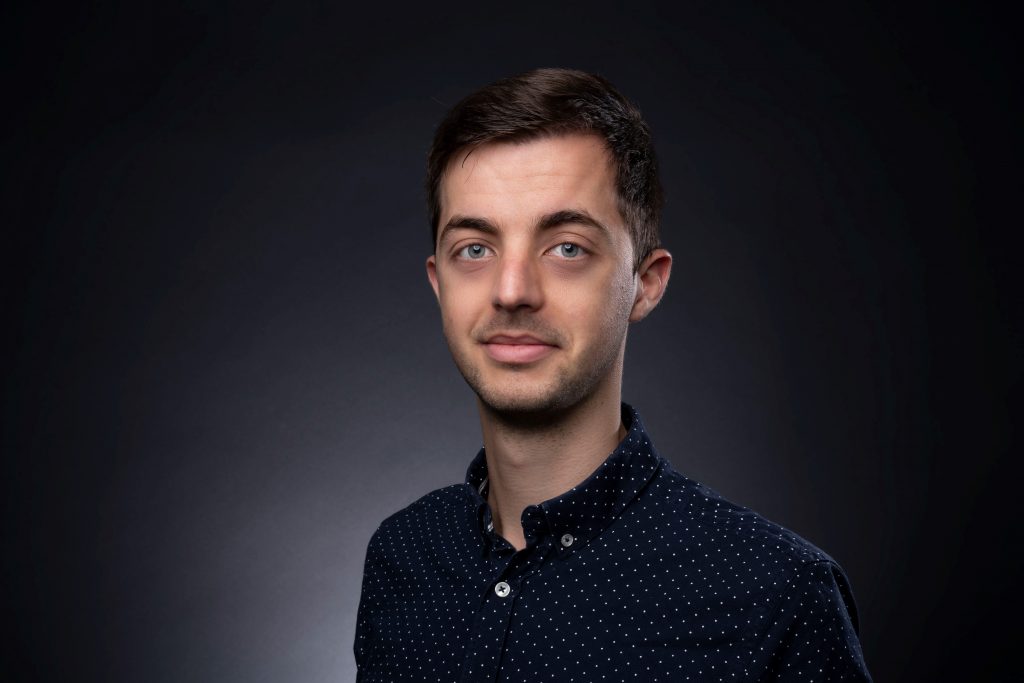
PhD researcher
Milan Tamis
Phd candidate | The psychology of locally shared sustainable technology
- Institution
- Amsterdam University of Applied Sciences (HvA) / Eindhoven University of Technology
- Work package
- In NEON
- 2021-2026
- PhD
- defended, 27 May 2026
- Thesis
- Sharing public residential charging points: A social-psychological perspective
- Now
- Postdoctoral researcher at the Amsterdam Institute for Advanced Metropolitan Solutions (AMS Institute), affiliated with TU Delft, and lecturer in applied research methods at the Amsterdam University of Applied Sciences
PhD candidate in WP7 (human factor), employed at HvA and enrolled at TU/e; promotors Floor Alkemade (TU/e) and Gerdien de Vries (TU Delft), copromotor Reint Jan Renes (HvA).
Behavioural researcher in the Psychology for Sustainable Cities group at the Amsterdam University of Applied Sciences, working on electric vehicle adoption and charging behaviour. His NEON PhD, obtained as an external candidate at TU/e, examined how EV drivers share public residential charging points; he now studies behaviour change and public support in Amsterdam's local energy transition projects as a postdoc.
About me
Behavior and its complexity are fascinating to me. I am intrigued as to how different groups of people deal with sustainability and climate change and why some people behave pro-actively, whereas others behave avoidantly. I live in the city, and I love going to the beach to relax, no matter the season. In my spare time I like to do sports (running, calisthenics, yoga), try to learn something new, cook healthy and mostly plant-based meals, have habit of playing video games, and try to maintain a creative outlet. I love getting to know new people.
Personal Motivation
Aside from the thirst for knowledge about a topic I am fond of and the drive to develop myself further professionally and contribute to a sustainable society, I love working on this PhD because I believe that technological innovation is not enough to combat climate change and that sustainability requires behavior change as well. Hence, we need to explore the relation between sustainable technology and behavior. With an increase in attention for sustainable technologies to solve climate related issues, comes an increase in attention for the behavioral response to these new sustainable technologies. As citizens, people voice opinions on novel technologies they encounter in public spaces and as consumers, people buy or refrain from buying sustainable technologies for a myriad of reasons that often go beyond rational economic behavior. Different psychological, social, and contextual factors influence people’s behavior as citizens and consumers when it comes to the use and acceptance of sustainable technologies, which is why it is important to explore these factors.
The human factor
The aim of the research conducted in work package 7 is to study the social and behavioural aspects that arise with the development and implementation of sustainable energy and mobility technology. This concerns aspects such as the adoption of a technology and the personal preferences on the use of a technology. The research results from this work package can be used as input for the agent-based model in work package 10.
Link to other neon research
I will expect to be working most closely with Helena Schmidt, who studies the social acceptance of airborne wind energy, as well as the researchers from work package 10, to provide input on behavior for the integral model. Depending on the technologies chosen for the studies in my PhD, I might also collaborate with researchers from the technology-oriented work packages.
Profile text from the former NEON website.
✎ draftSupervised by

Publications and talks
- Sharing public residential charging points: A social-psychological perspective (phd-thesis, 2026)
- Moving your electric car for others: Identifying injunctive norms for sharing public charging points (journal-article, 2026)
- Sharing neighbourhood charging points: Surveying communication and agreements between electric vehicle drivers in the Netherlands (journal-article, 2026)
- Plugging in with neighbours: Defining the social dimension of electric vehicle charging in the Netherlands (journal-article, 2024)
- PhD defence: Sharing public residential charging points: A social-psychological perspective (phd-defence, 2026-05-27)