People / Kurt Stolle
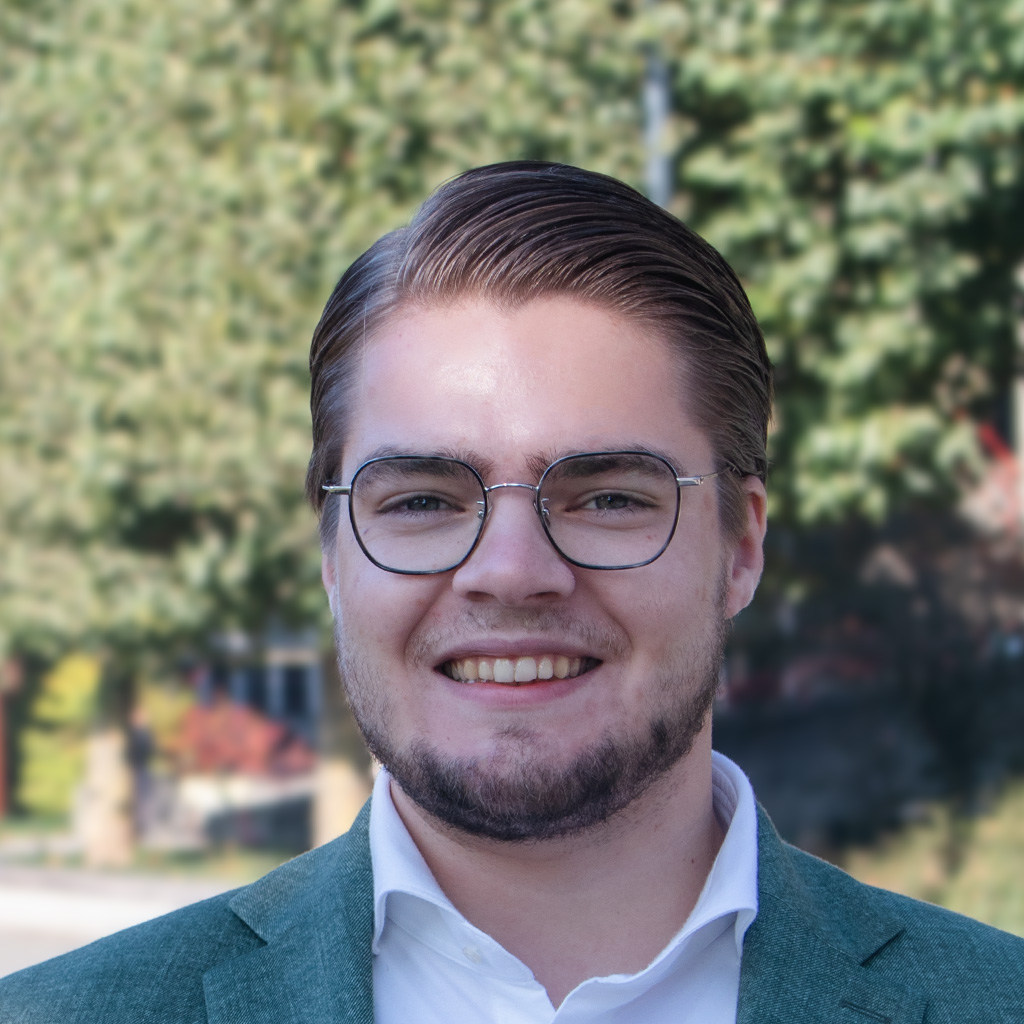
PhD researcher
Kurt Stolle
Phd candidate | Ai for the improvement of autonomous vehicles
- Institution
- Eindhoven University of Technology
- Work package
- In NEON
- 2022 onwards
PhD candidate in WP6b (Automated vehicle safety) on AI-based machine perception for safer automated vehicles.
Kurt Stolle is a PhD researcher in the Mobile Perception Systems lab of the Department of Electrical Engineering at Eindhoven University of Technology. He works on camera-based scene understanding for automated vehicles, including depth-aware video panoptic segmentation, multi-task perception models and efficient GPU implementations of vision transformers.
About me
My career started with the malicious intents of reverse engineering video games in order to gain the competitive edge. Having eventually turned this into a successful business, I became fascinated with the ways in which customers interacted with my products, and found an intrinsic curiosity in software and hardware systems. Subsequently, I studied Electrical Engineering at Eindhoven University of Technology (TU/e) in order attain a deep understanding of computer systems. During this time, the field of machine learning had been growing at an unprecedented rate. Seeing the applications for these novel ‘AI’ systems has drawn me to pursue a career in research on intelligent perception systems.
Personal Motivation
Humans have the amazing capacity to continuously learn new skills and generalize this knowledge from one domain to the other. For example, we can safely drive a car in all the different weather conditions the world presents us with. While driving, our mind makes life-and-death decisions based on the information that our senses have been evolved to provide us with. At the same time, we are functioning in a larger system of other drivers while constantly being distracted by various other thoughts and impulses.
By contrast, the future of sustainable mobility is characterized by (semi-)autonomous driving, where driving decisions are proposed by a computer program. For all practical implementations of such systems, the orchestrating computer has to construct a virtual model of the environment around it and the agents that influence it. This requires intelligent sensors that interprets reality in a way that maximizes systems’ abilities to make meaningful decisions. I believe that exploring innovative avenues in which we can improve machine perception will lead to a safer and more robust future for mobility. The emergent capabilities have the potential to make a lasting impact on the ways in which we interact with our vehicles.
Profile text from the former NEON website.
✎ draftSupervised by
Publications and talks
- Efficient Multi-Scale Deformable Attention on GPUs (journal-article, 2026)
- Transferable Tracker Configurations for Image-Trained Video Panoptic Segmentation (conference-paper, 2026)
- Balancing Shared and Task-Specific Representations: A Hybrid Approach to Depth-Aware Video Panoptic Segmentation (conference-paper, 2025)
- Unified Perception: Efficient Depth-Aware Video Panoptic Segmentation with Minimal Annotation Costs (report, 2023)
- Block-Level Surrogate Models for Inference Time Estimation in Hardware Aware Neural Architecture Search (conference-paper, 2022)